Visual comparison
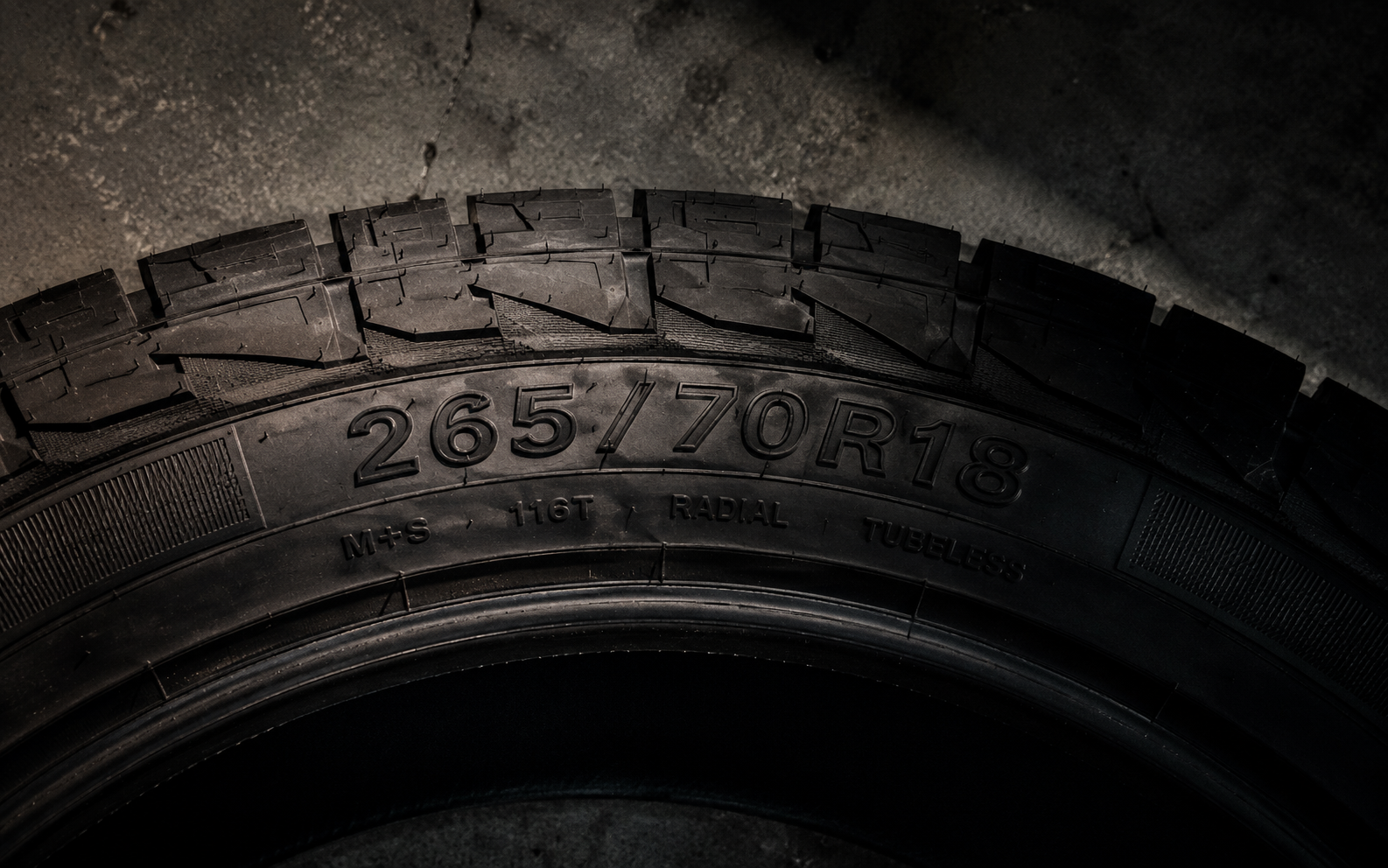
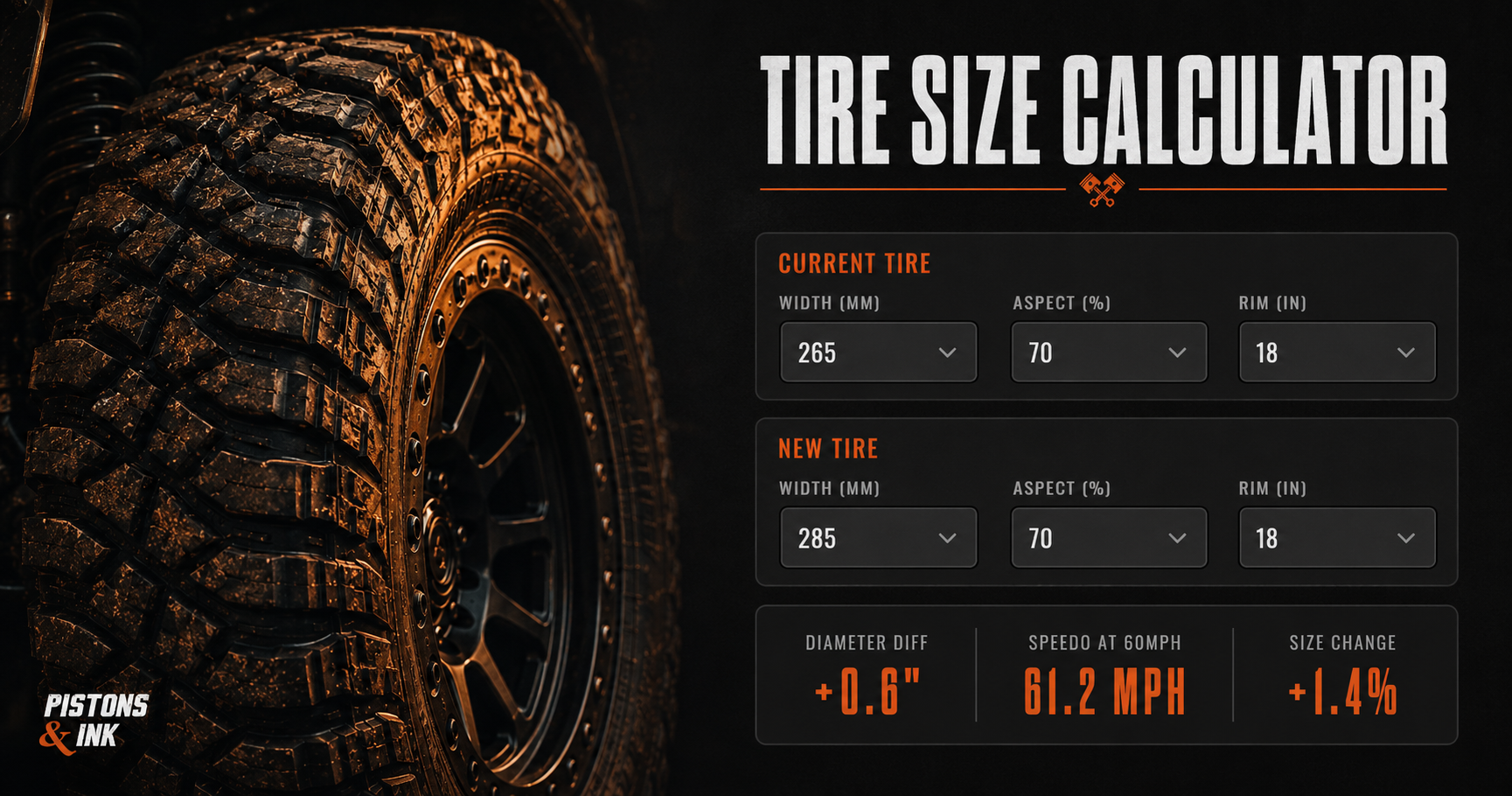
265/70R18
285/70R18
Current
New
Measurements
| Spec | Current | New | Difference |
|---|---|---|---|
| Diameter | — | — | — |
| Width | — | — | — |
| Sidewall height | — | — | — |
| Circumference | — | — | — |
| Revs per mile | — | — | — |
Speedometer error
| Speedo reads | Actual speed | Error |
|---|
Shop this size
285/70R18
Affiliate disclosure: the buttons above link to tire retailers. If you buy through them, Pistons & Ink may earn a commission at no extra cost to you. Prices and availability are set by each retailer.
Gear ratio & RPM helper
Optional — helps you find the right axle ratio for your new tire size
—
MPH (current tire)
—
MPH (new tire)
—
Recommended ratio for new tire
Reading a P-Metric size
A size like 265/70R18 means: 265mm wide, 70% aspect ratio sidewall, R = radial, 18" rim. The sidewall height is width × aspect ÷ 100.
Reading an inch size
A size like 33×12.50R18 means: 33" overall diameter, 12.5" wide, 18" rim. Common on trucks and off-road rigs running larger aftermarket tires.
Why speedometer accuracy matters
A larger tire covers more ground per revolution. Your speedo reads low — you're going faster than it shows. Recalibrate your speedo or adjust your gear ratio to compensate.